Dire Straits: War, Tariffs, and the Fine Print of Force Majeure
Dean Falvy
Partner, Quadrant Law Group, LLP
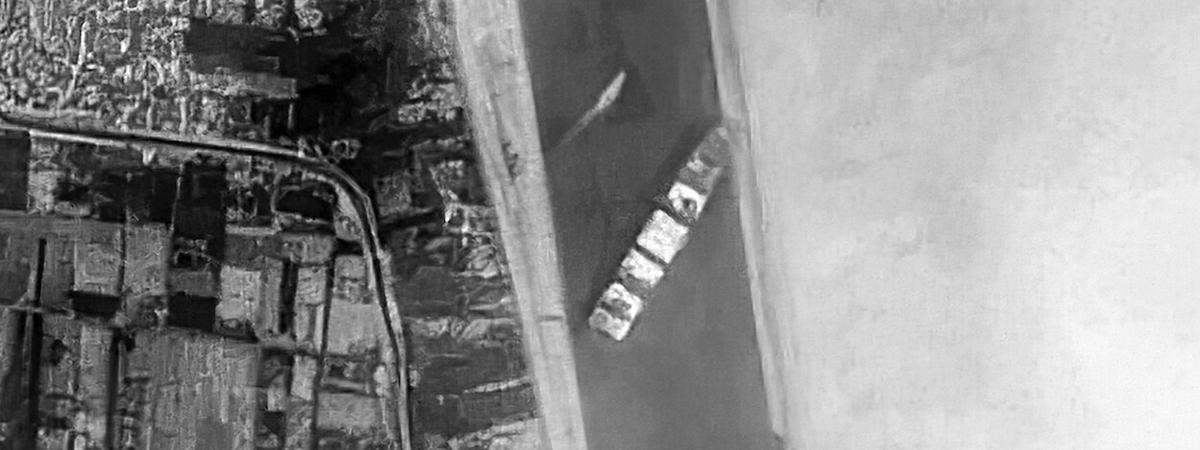
It is often asserted that the first casualty of war is truth. But commercial contracts are often not far behind.
Like natural disasters and pandemics, wars have a way of throwing pre-contractual expectations into a blender and pressing frappe. The outbreak of another war in the Persian Gulf did not just put thousands of soldiers, sailors, aviators, and refugees in motion — it also sent legions of lawyers to the back pages of their contracts, looking for the force majeure provision.
These clauses can excuse non-performance in the event of unforeseen disasters. But they are not universal “get-out-of-jail free” cards. Their effect can differ markedly based on definition of force majeure, the steps that must be taken to overcome it, and the background law governing the contract.
Think of a contract to fill a tanker with oil in Kuwait and deliver it to Vietnam. The closure of the Strait of Hormuz has suddenly made this once-routine transaction a nearly impossible feat. But what about the factories in Vietnam that must cut operating hours for lack of that fuel? What about the companies relying on shipments from those factories to fulfill orders from their own customers? Who will be excused, and who will be left holding the bag?
We will need to read the contract to find out.
What is Force Majeure?
The Romans get credit for the notion that parties to a contract are responsible for their own failures and negligence, but not for overwhelming external events beyond their control. They called those things vis maior (or “greater force”). Napoleon, who knew a thing or two about war and its complications, gave the idea a reboot as “force majeure” in his famous Civil Code of 1804. The name stuck in most civil-law countries long after Napoleon was sent packing for St. Helena.
What’s It Doing in Our Contracts?
The Anglo-American common law tradition developed a parallel doctrine, variously called frustration of contract or impossibility, that also excused non-performance of contracts in some circumstances. But that doctrine was more rigid and less commercially minded than force majeure, which meant that many English-speaking lawyers began to borrow the French term and write it into their contracts. (It probably didn’t hurt that using French made them sound a little fancy.)
What Do Force Majeure Clauses Say?
The typical elements of a force majeure clause are (1) a definition of events that are both unforeseeable and outside the control of a party, (2) that prevent or impede that party’s performance of the contract, and thus (3) excuse the resulting non-performance.
So, All Force Majeure Clauses Are the Same, Right?
Actually, it turns out that they are not. This is where it gets interesting—or at least interesting-for-a-contract-lawyer interesting. Force majeure clauses have some beguiling similarities on the surface, but they need to be read closely and drafted with intention. How tight (or loose) is the definition of force majeure? How serious does the impediment need to be to excuse a party’s non-performance? How long does the excuse last, and what are the consequences for the contract? These are the details savvy lawyers need to be thinking about, instead of letting their eyes glaze over when they hit the words force majeure.
Does the List of Calamities Matter?
Force majeure provisions usually begin with a long list of potential disasters. Some have sufficient biblical resonance to be called “Acts of God” (e.g., floods, earthquakes, fires, hurricanes), while others remain All Too Human (such as wars, embargoes, insurrections, strikes, lockouts, and failures of the Internet).
The list matters. It cannot be exhaustive, of course, given the resourcefulness of both nature and human beings to concoct new forms of catastrophe. But there should be no obvious omissions, either. The list should give a sense of both the breadth and severity of events that may qualify as force majeure.
A catch-all phrase is typically added at the end of the list, such as “or any other causes or conditions that are beyond such party’s reasonable control.” But it would be unwise to rely too heavily on such a clause to sweep up loose ends. When new kinds of events arise, they must be compared and analogized to the examples of force majeure actually listed. If a provision lists only natural disasters, good luck trying to stretch it to cover acts of assertive governments or unruly humans.
Before 2020, force majeure provisions were unlikely to mention “pandemics” – and thus became the source of litigation when the world became forcefully reacquainted with the term. If the provision did mention plagues or quarantines, however, the debate would be resolved fairly quickly. If the clause only mentioned “acts of government” then it might cover lockdowns, but not other aspects of the COVID-19 experience.
Trade, Wars, and Trade Wars
Tariffs have not been a regular feature of force majeure provisions. Traditionally, tariff rates moved slowly and predictably, based on legislation and treaties—the very opposite of unforeseen events. Since Donald Trump’s return to office in 2025, however, tariff spikes seem about as predictable as tsunamis. Does this wild new species of tariffs excuse non-performance?
Probably not. Most force majeure clauses mention sanctions, embargoes and other governmental actions that make certain kinds of trade impossible. Tariffs are a very different animal. They undoubtedly make it more expensive to import goods, but they do not make it illegal. Nevertheless, new tariffs imposed without warning or process can feel more like geopolitical earthquakes than the normal workings of economic policy. A high enough rate can make trade practically unfeasible – and that may be the point. Trump’s tariffs have been so sudden and astronomical that lawyers may soon be crafting new force majeure triggers to cope with them.
There Is No Try
Force majeure provisions also vary considerably in how easily they let a party off the hook for its obligations. Must performance be impossible, or is it sufficient for it simply to be impeded? How much effort and diligence does the party need to make to overcome the obstacle, or can it simply throw up its hands at the first sign of external trouble? If performance is still possible, but simply more expensive, does a party still need to perform its obligations? (And what if it is not just more expensive, but ruinously and foolishly expensive to fulfill the contract – like hauling Kuwaiti oil across the desert in trucks?)
If a party can’t perform because its suppliers or subcontractors fail to perform, is that a force majeure event, or is it something for which the party should remain responsible? (Our hypothetical factory owners in Vietnam will want to know.) Each of these choices can end up being more important than the definition of force majeure itself.
Excuses and Consequences
A force majeure event usually does not end a contract or extinguish obligations. Rather, it prolongs the contract and delays the effective due date of the obligations. Because it excuses what otherwise would be a breach, it can take away what would normally be a termination right. This can be a balm for the impeded party; it can be a disaster for the party left waiting indefinitely for goods and services that it may have already paid for. When drafting a force majeure provision, it is important to weigh time limits for nonperformance and a termination right in worst-case scenarios.
Who Benefits?
It should be clear by now that a force majeure provision is not a neutral, space-filling bit of contractual boilerplate. It may lean lightly or heavily to one party or the other, but it will rarely serve them both equally.
In most commercial contracts, the bulk of obligations to provide goods or services fall on one party (the seller), while the most significant duty of the other party (the buyer) is simply to pay. A broad, loosely worded force majeure clause primarily benefits the seller by providing a wide range of possible excuses for non-performance. Indeed, a force majeure provision in the seller’s form agreement will often go out of its way to say that payment obligations are not excused, regardless of the nature and extent of the disaster. (The entire banking system could be wiped out, and the buyer is still expected to make payment.)
By contrast, a tightly worded force majeure provision can benefit the buyer by making it clear that the seller must notify the buyer of the reasons for delay, diligently overcome obstacles (even at great cost), and accept termination and the refund of any pre-paid amounts if the delay proves to be excessively prolonged.
Down to the Waterline
The inconveniences of commerce, especially as experienced from afar, may seem minor in comparison to the perils endured by those living or fighting in the actual theater of war. Nevertheless, collectively, they will affect the life of the entire world for many years to come. The costs will not be allocated evenly or fairly. One thing you can do, however, is match your force majeure clause to your position in the marketplace. The rest is not under your reasonable control.
For additional information, please contact:
Dean Falvy, Partner
Quadrant Law Group, LLP
This Bulletin is provided for informational and educational purposes only. It does not constitute legal advice or establish an attorney-client relationship. This Bulletin may be considered attorney advertising in some states.
Quadrant Law Group, LLP © 2026. All rights reserved. 203 N. La Salle St. Suite 2100, Chicago, IL 60601